Keweenaw Rocket Range: Complete History of Michigan’s Abandoned Launch Site (1964–1971)

The Keweenaw Rocket Range is one of Michigan’s most intriguing yet overlooked Space Age landmarks. Hidden at the northern edge of the Keweenaw Peninsula near Copper Harbor, this remote launch site once supported atmospheric research during a defining period in American history. Between 1964 and 1971, rockets lifted off from this isolated location, contributing valuable scientific data to Cold War–era research programs.
Today, the Keweenaw Rocket Range stands abandoned, surrounded by dense forest and the powerful waters of Lake Superior. Although time and weather have eroded much of the infrastructure, the site continues to attract historians, explorers, and curious travelers. Its story blends innovation, academic ambition, and the quiet determination of researchers who sought answers in the upper atmosphere.
The Origins of the Keweenaw Rocket Range
The Space Race and the Need for Remote Testing Sites
During the 1960s, the United States was deeply invested in expanding its scientific capabilities as part of the global Space Race. Research institutions across the country were tasked with developing technologies and conducting experiments that could strengthen national defense and communication systems. The Keweenaw Rocket Range emerged from this urgent need for isolated testing grounds where sounding rockets could be safely launched.
Remote sites were essential for minimizing risk and ensuring controlled launch environments. Northern Michigan’s rugged terrain offered the perfect balance of accessibility and isolation. With Lake Superior providing a vast, open safety buffer, researchers could conduct atmospheric studies without endangering populated areas. This combination of geography and opportunity laid the groundwork for the Keweenaw Rocket Range.
University of Michigan’s Vision and Leadership
The University of Michigan played a leading role in establishing and operating the Keweenaw Rocket Range. Faculty members and research teams recognized the strategic advantage of having a dedicated launch facility under academic supervision. The site allowed scientists to conduct hands-on experiments while training students in real-world aerospace engineering and atmospheric research.
Federal partnerships provided funding and technical collaboration, strengthening the university’s capabilities. The Keweenaw Rocket Range became more than just a launch pad; it served as a living laboratory. Through this initiative, academic innovation aligned with national objectives, demonstrating how universities contributed directly to advancing aerospace science during a pivotal era.
Geographic Significance of the Keweenaw Peninsula
Why Location Mattered for Rocket Launches
The Keweenaw Rocket Range sits near the tip of Michigan’s Upper Peninsula, a region known for dramatic cliffs, dense forests, and sweeping views of Lake Superior. Its location offered a rare advantage: rockets could be launched over open water, reducing the risk of debris falling on inhabited areas. This safety feature made the site highly attractive for atmospheric experiments.
Additionally, the surrounding environment minimized interference from urban infrastructure. Clear skies and low population density created favorable conditions for tracking rocket trajectories and collecting data. The natural isolation of the Keweenaw Rocket Range ensured that scientific missions could proceed with minimal external disruption, an essential factor during sensitive Cold War research operations.
Environmental Challenges and Logistical Hurdles
Despite its advantages, the remote setting presented considerable challenges. Harsh winters, heavy snowfall, and limited road access complicated the transportation of equipment and personnel. Researchers had to carefully plan each mission, accounting for unpredictable weather and rugged terrain that could delay operations.
Maintaining infrastructure in such a remote area required dedication and resilience. Teams working at the Keweenaw Rocket Range adapted to the environment, developing strategies to manage extreme conditions. Their efforts reflect the determination of scientists who pursued knowledge despite physical and logistical obstacles.
Rocket Launch Operations and Scientific Contributions
Atmospheric Research and Sounding Rockets
From 1964 through 1971, the Keweenaw Rocket Range supported numerous sounding rocket launches. These smaller research rockets carried scientific instruments designed to measure atmospheric temperature, pressure, wind patterns, and ionospheric conditions. Data gathered from these missions improved understanding of Earth’s upper atmosphere and enhanced communication technologies.
Sounding rockets were particularly valuable for short-duration experiments that required direct measurement at high altitudes. The Keweenaw Rocket Range provided an ideal testing environment for such missions. Each launch represented careful coordination among engineers, technicians, and researchers working toward shared scientific goals.
A Hub of Innovation During the Cold War
The site’s contributions extended beyond data collection. It served as a platform for technological experimentation and engineering development. Students and faculty gained practical experience in rocket assembly, launch procedures, and data analysis. This hands-on involvement strengthened academic programs while supporting national research initiatives.
The Keweenaw Rocket Range became a symbol of quiet innovation. Though not as widely recognized as major space centers, its work played a meaningful role in advancing atmospheric science. The collaborative atmosphere fostered creativity and problem-solving, hallmarks of the Space Age spirit.
Closure and Transformation into a Historical Site
Decline of Funding and Changing Priorities
By the early 1970s, advancements in satellite technology began to replace certain types of sounding rocket research. Federal funding priorities shifted, and maintaining smaller launch facilities became less practical. In 1971, operations at the Keweenaw Rocket Range officially ended, marking the conclusion of its active research phase.
The decision to close the site reflected broader changes in aerospace strategy. As space exploration evolved, centralized facilities and satellite systems offered more efficient alternatives. The Keweenaw Rocket Range, once at the forefront of atmospheric research, gradually faded from operational relevance.
Nature Reclaims the Launch Pad
After its closure, equipment was removed and maintenance ceased. Over time, vegetation overtook much of the cleared area. Concrete foundations and structural remnants remain visible, but the forest has reclaimed the surrounding land. This transformation has given the site an almost mysterious character.
Today, the Keweenaw Rocket Range stands as a quiet monument to scientific ambition. Its abandoned state invites reflection on the rapid pace of technological change. What was once cutting-edge infrastructure is now a historical landmark shaped by both innovation and nature.
Visiting the Keweenaw Rocket Range Today
Exploring a Remote Space Age Landmark
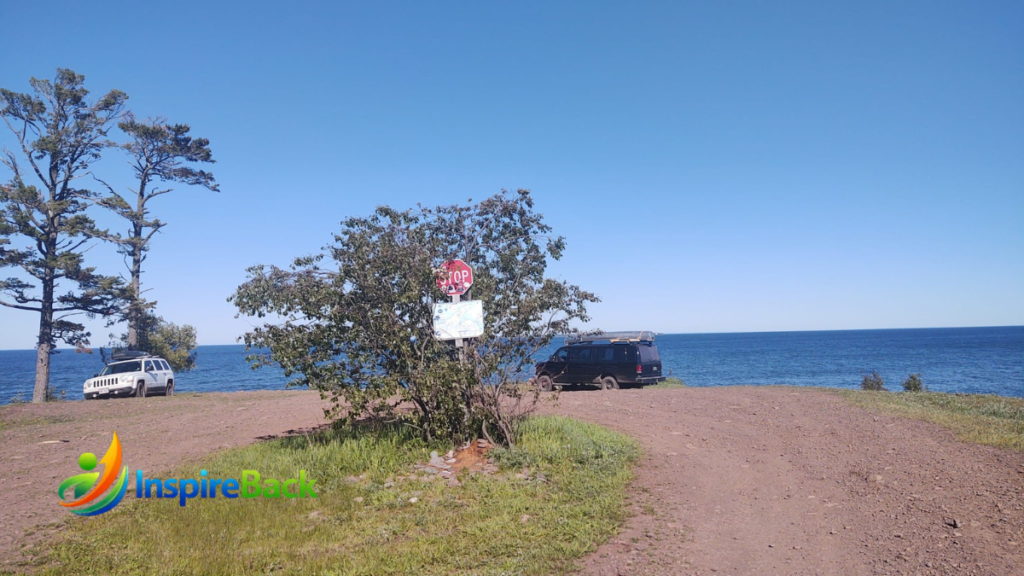
Visitors seeking out the Keweenaw Rocket Range must navigate remote forest roads and rugged terrain. The journey itself adds to the sense of discovery, as travelers venture far from urban centers. Reaching the site offers a rare opportunity to stand where rockets once launched into the sky.
Though no formal facilities exist, explorers can still observe remnants of the launch pad and surrounding infrastructure. The site’s isolation enhances its historical atmosphere. For many, visiting the Keweenaw Rocket Range is both an educational experience and an adventure into Michigan’s lesser-known past.
Responsible Travel and Preservation
Because the location is unmaintained, visitors should practice responsible exploration. Respecting the environment and preserving remaining structures ensures that future generations can appreciate the site. The absence of signage or amenities underscores the importance of preparation and safety awareness.
Interest in the Keweenaw Rocket Range has grown among history enthusiasts and photographers. By approaching the site thoughtfully, visitors help protect its legacy. Responsible tourism supports the preservation of this unique Space Age relic within Michigan’s rugged landscape.
The Lasting Legacy of the Keweenaw Rocket Range
The Keweenaw Rocket Range represents a remarkable chapter in American scientific history. Although active for only seven years, it contributed valuable atmospheric data and fostered academic innovation. Its existence demonstrates how even remote regions can play significant roles in national research efforts.
Today, the Keweenaw Rocket Range remains a powerful reminder of the ambition and curiosity that defined the Space Race era. From its origins in Cold War research to its current status as an abandoned landmark, the site tells a compelling story of progress, change, and enduring historical significance.
Conclusion
The Keweenaw Rocket Range remains one of Michigan’s most fascinating hidden landmarks from the Space Age. Though active for only a short period between 1964 and 1971, the site played a meaningful role in atmospheric research and academic innovation. Its remote setting along Lake Superior provided the ideal environment for sounding rocket launches during a critical era of scientific advancement.
Today, the Keweenaw Rocket Range stands as a quiet reminder of America’s determination to explore and understand the upper atmosphere. While nature has reclaimed much of the site, its historical importance continues to attract visitors, researchers, and history enthusiasts. Preserving awareness of this abandoned launch facility ensures its contributions to aerospace science are not forgotten.
Frequently Asked Questions
What was the Keweenaw Rocket Range used for?
The Keweenaw Rocket Range was used for launching sounding rockets to study the upper atmosphere, collect scientific data, and support Cold War–era research programs between 1964 and 1971.
Where is the Keweenaw Rocket Range located?
The Keweenaw Rocket Range is located near Copper Harbor on Michigan’s Keweenaw Peninsula, along the shores of Lake Superior in the Upper Peninsula.
Who operated the Keweenaw Rocket Range?
The site was primarily operated by the University of Michigan in collaboration with federal research agencies during the Space Race period.
Why did the Keweenaw Rocket Range close?
The Keweenaw Rocket Range closed in 1971 due to changes in federal funding priorities, advancements in satellite technology, and shifting aerospace research strategies.
Can the public visit the Keweenaw Rocket Range today?
Yes, the site can be visited, but it is remote and unmaintained, requiring travel along forest roads and careful preparation for safe exploration.
What remains at the Keweenaw Rocket Range?
Visitors can still see remnants of the launch pad, concrete foundations, and cleared areas that once supported rocket operations, though most structures have deteriorated over time.
Also Read: scientific pitch notation