waffen ss camo – Historical Overview of WWII German Camouflage Uniforms

The development of waffen ss camo represents one of the most studied aspects of German military uniform history during the Second World War. At a time when most armies still relied on solid-colored field uniforms, German designers explored complex printed patterns intended to break up the human silhouette in natural environments. This forward-thinking approach placed camouflage at the center of battlefield survival rather than treating it as a secondary feature.
From dense European forests to the varied landscapes of the Eastern Front, concealment became increasingly important as warfare evolved. The innovation behind waffen ss camo reflected both tactical necessity and technological experimentation. By combining textile research with artistic pattern design, German manufacturers produced some of the earliest large-scale printed camouflage garments ever issued to combat troops.
Origins of Waffen-SS Camouflage
The roots of waffen ss camo can be traced back to pre-war experimentation in the 1930s, when German researchers began testing disruptive patterns inspired by natural foliage and shadow effects. Early prototypes focused on irregular shapes layered in contrasting tones, designed to distort the human outline at medium viewing distances. These efforts marked a shift away from plain field-gray uniforms toward more specialized concealment solutions.
As production methods improved, the Waffen-SS adopted printed smocks that could be worn over standard uniforms. This layered system allowed flexibility without replacing existing garments. Textile printing techniques became more sophisticated, incorporating multiple color screens to create depth and variation. These early developments laid the foundation for the wide range of camouflage patterns that followed during the war.
Major Waffen-SS Camouflage Patterns
The diversity of patterns is one of the defining features of waffen ss camo. Designers continuously refined shapes, colors, and printing techniques to match seasonal terrain and operational theaters. Each pattern introduced subtle variations intended to enhance concealment while maintaining practical wearability for soldiers in active combat situations.
Among the earliest and most recognizable designs was the Plane Tree pattern, characterized by rounded blotches layered over contrasting backgrounds. This was followed by the Oakleaf pattern, which featured sharper, leaf-like shapes and improved blending. Both patterns were often produced in reversible versions, allowing soldiers to switch between spring and autumn color schemes depending on environmental conditions.
Dot Pattern and Late-War Innovations
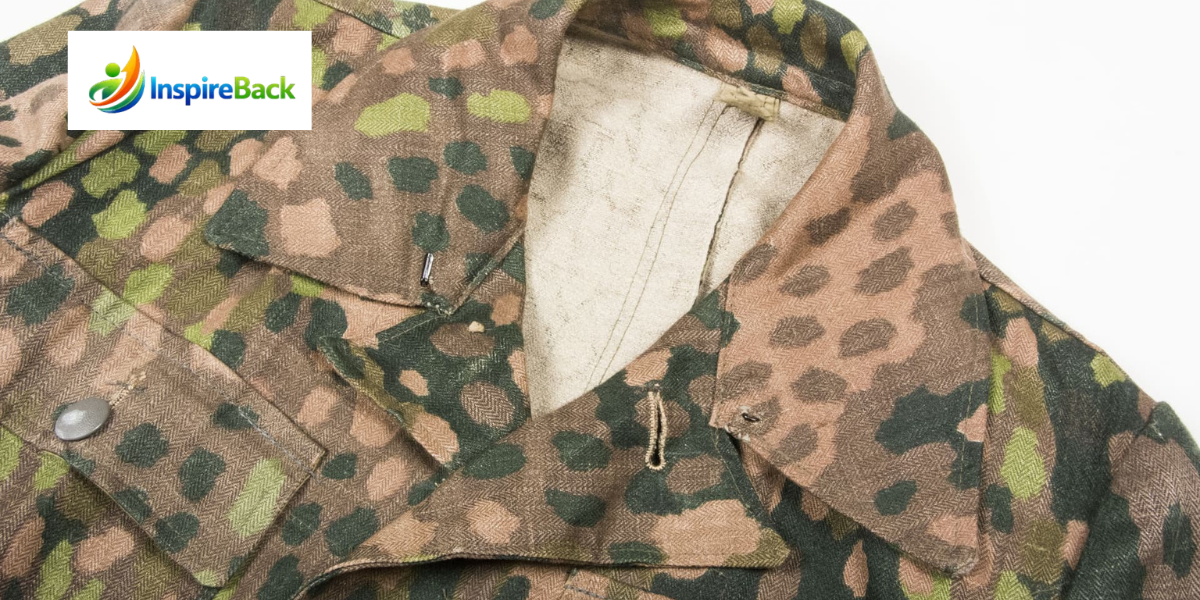
By 1944, the introduction of the Dot pattern marked a significant evolution in waffen ss camo design philosophy. Instead of large, organic shapes, this pattern used small, densely arranged dots that created a diffused visual effect. The result was a more uniform blending capability across varied terrain types, particularly effective at multiple viewing distances.
Unlike earlier smocks, the Dot pattern appeared on complete field uniforms rather than outer layers alone. This shift represented a move toward fully integrated camouflage clothing. Despite wartime shortages and logistical strain, manufacturers continued refining color application and fabric durability, demonstrating the persistent importance placed on effective concealment.
Uniform Types and Field Applications
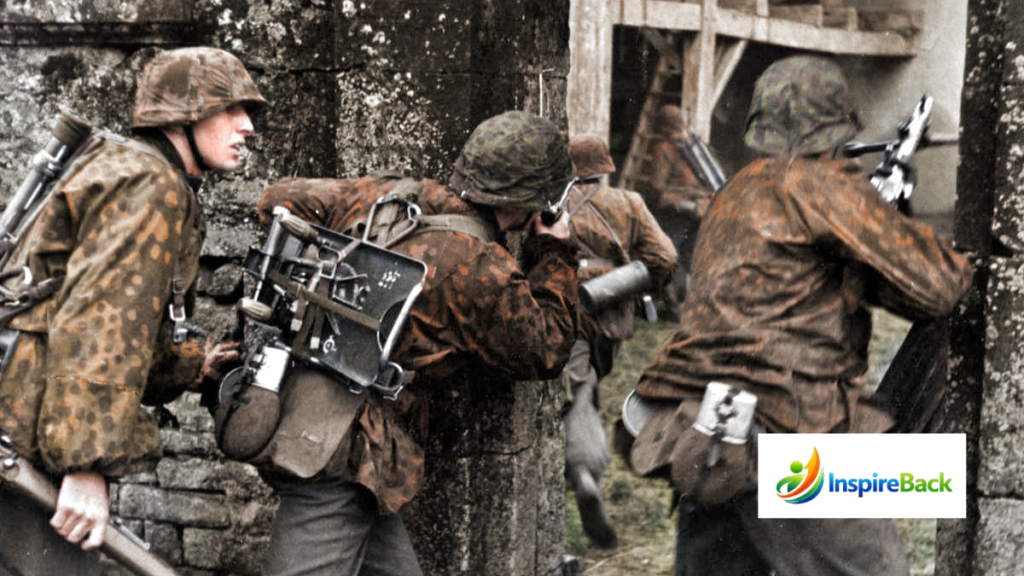
Waffen SS camouflage extended beyond jackets and trousers. The most common garment was the camouflage smock, designed to be worn over the standard tunic. These smocks typically included elastic cuffs, drawstrings, and reversible construction, enhancing both comfort and adaptability. Helmet covers were also printed to match the smocks, further breaking up recognizable shapes on the battlefield.
Shelter quarters, known as Zeltbahns, were another critical component of the camouflage system. These multipurpose fabric panels served as ponchos, tent sections, and field coverings. By printing Zeltbahns in matching patterns, units maintained visual consistency across equipment. This comprehensive approach made waffen ss camo more than just a uniform feature; it became an integrated concealment system.
Manufacturing and Textile Technology
The creation of waffen ss camo required advanced textile printing processes for its time. Screen-printing methods applied multiple layers of dye to achieve depth and overlapping shapes. Cotton fabrics were commonly used, though blends varied depending on resource availability. The complexity of these prints demanded precision to maintain consistent color alignment across large fabric sections.
As the war progressed, supply shortages impacted both material quality and production speed. Factories faced disruptions from bombing campaigns and limited access to dyes. Despite these challenges, the essential design principles remained intact. Even late-war examples reveal a commitment to maintaining camouflage effectiveness, underscoring the strategic importance placed on concealment.
Evolution Throughout the War
Early-war patterns featured bold contrasts suited to forested Western European terrain. As operations expanded into Eastern Europe and other regions, pattern coloration adapted to reflect varied landscapes. Designers adjusted hues and contrast levels to better blend with seasonal foliage, dry grasslands, and mixed woodland environments.
By the final years of the war, efforts to standardize production became more pronounced. The introduction of complete camouflage uniforms simplified logistics while enhancing battlefield efficiency. Although quality variations increased due to industrial strain, waffen ss camo retained its distinctive layered aesthetic and functional advantages.
Differences from Wehrmacht Camouflage
While the regular German Army also utilized camouflage, its approach differed in organization and distribution. The Waffen-SS maintained separate development channels, allowing for independent experimentation. This independence led to unique patterns not widely issued outside its formations, reinforcing a distinct visual identity.
The broader German military adopted camouflage more gradually and often relied on different pattern philosophies. In contrast, waffen ss camo demonstrated a willingness to innovate rapidly and test new concepts in active combat zones. This distinction highlights the organizational differences that shaped uniform development during the war.
Tactical Effectiveness in Combat
Camouflage effectiveness depends on terrain, distance, and lighting conditions. Historical assessments suggest that these printed patterns successfully disrupted the human silhouette in wooded and mixed environments. The layered shapes reduced visual contrast against foliage, making detection more difficult at moderate ranges.
Compared to many early-war Allied uniforms, which often relied on solid colors, waffen ss camo displayed greater complexity and environmental adaptation. Its reversible construction further enhanced flexibility, allowing soldiers to adjust to seasonal changes without requiring entirely new equipment sets.
Legacy and Modern Influence
The influence of wartime German camouflage research extended into the post-war era. Military designers worldwide studied the layering techniques and organic shapes pioneered during this period. Concepts such as multi-tone blending and seasonal adaptation became standard considerations in modern camouflage development.
Today, historians and collectors examine surviving garments to understand the technical and artistic innovation behind these patterns. While rooted in a specific historical context, waffen ss camo remains an important case study in the evolution of military textile design and battlefield concealment strategy.
Conclusion
The history of waffen ss camo reflects a blend of scientific experimentation, artistic design, and tactical necessity. From early reversible smocks to fully printed uniforms, these patterns represented a significant advancement in military clothing technology during World War II.
Although shaped by the circumstances of its time, the broader principles behind waffen ss camo influenced camouflage development for decades. Its layered textures, environmental adaptability, and integrated equipment design continue to be referenced in discussions of military innovation and textile engineering.
Frequently Asked Questions
What does waffen ss camo refer to?
Waffen ss camo refers to the series of camouflage patterns developed and worn by Waffen-SS units between 1936 and 1945. These included smocks, helmet covers, shelter quarters, and later full field uniforms designed for improved battlefield concealment.
Which pattern was most widely issued?
The Oakleaf and Dot patterns became especially widespread during the mid to late war years. Their adaptable color schemes and improved blending capabilities made them practical choices for diverse combat environments.
Were these uniforms reversible?
Many early camouflage smocks were reversible, typically featuring spring and autumn variations. This allowed soldiers to quickly adapt to seasonal terrain changes without needing separate garments.
Did these designs influence modern camouflage?
Yes, many post-war camouflage systems drew inspiration from the layered printing methods and environmental blending techniques introduced during this period. These early innovations helped shape the direction of modern military uniform design.
Also Read: lms duchess class