
Scientific Pitch Notation: The Complete Beginner’s Blueprint to Reading Musical Pitch Like a Pro

Music is a universal language, but describing exact pitches requires precision and consistency. Scientific pitch notation provides a structured way to name and identify musical sounds using a combination of note letters and octave numbers. This system eliminates confusion by giving every pitch a unique label that musicians, composers, and producers can universally understand.
In today’s digital and academic environments, scientific pitch notation plays a critical role in music education and production. Whether you are reading sheet music, programming MIDI notes, or discussing vocal range, this method ensures clarity. By mastering scientific pitch notation, beginners and professionals alike gain a powerful tool for communicating musical ideas accurately and efficiently.
Understanding Scientific Pitch Notation
Scientific pitch notation is a standardized method used to define specific musical pitches. It combines a note name, such as C or A, with an octave number that indicates the pitch’s register. For example, C4 represents middle C on the piano, while A4 commonly refers to the concert tuning pitch of 440 Hz.
This approach removes ambiguity that can arise when describing pitches informally. Instead of saying “high C” or “low E,” musicians can reference exact octave numbers. Scientific pitch notation creates a shared framework that works across instruments, genres, and international music communities, making it essential for modern music theory and practice.
Definition and Core Concept
At its foundation, scientific pitch notation consists of two elements: the pitch class and the octave designation. The pitch class is identified by the letters A through G, while the octave number shows the note’s position within the broader pitch spectrum. Together, they create a precise label for any sound.
For instance, F#3 identifies the note F sharp in the third octave, clearly distinguishing it from F#4 or F#5. This clarity becomes especially important when writing arrangements or analyzing compositions. By consistently using scientific pitch notation, musicians avoid misunderstandings and maintain accuracy in both written and verbal communication.
Purpose and Importance in Music
The primary purpose of scientific pitch notation is standardization. In orchestras, classrooms, and recording studios, musicians must communicate exact pitches quickly and effectively. This system ensures that everyone understands which note is being referenced, regardless of their instrument or musical background.
Additionally, scientific pitch notation is fundamental in digital music production. Software programs, synthesizers, and MIDI controllers rely on octave numbering to display and trigger notes. Without this system, producing complex arrangements or collaborating across platforms would become far more complicated and less reliable.
The Structure of Scientific Pitch Notation
The structure of scientific pitch notation is built around the seven natural note names: A, B, C, D, E, F, and G. These notes repeat in patterns called octaves, with each octave containing the same sequence of pitches at a higher or lower frequency. Sharps and flats modify these notes to create additional pitch variations.
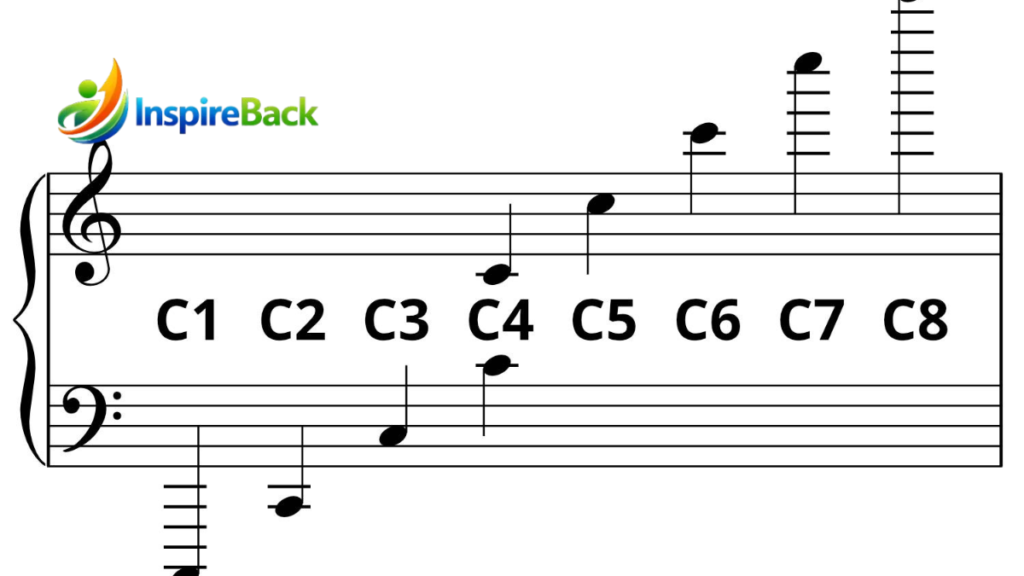
Octave numbers increase as pitches move higher and decrease as they move lower. On a standard piano, the range typically spans from C0 at the lowest end to C8 at the highest. This organized framework allows musicians to quickly locate and identify pitches within a wide tonal range.
The Seven Note Names and Accidentals
The seven musical note names form the foundation of Western music theory. Each note can also include an accidental, such as a sharp or flat, to raise or lower the pitch by a semitone. For example, G#4 and Ab4 represent the same sound but are written differently depending on musical context.
Understanding enharmonic equivalents is essential when using scientific pitch notation. Even though two notes may sound identical, their spelling can reflect different harmonic roles in a composition. This knowledge strengthens theoretical understanding and improves accuracy when reading or writing music.
Octave Numbers and Middle C
Octave numbers are a defining feature of scientific pitch notation. Middle C is labeled C4, serving as a central reference point for most instruments and vocalists. Notes below middle C are assigned lower numbers, while notes above it receive higher numbers.
For example, C3 sounds one octave lower than C4, and C5 sounds one octave higher. This logical progression allows musicians to visualize pitch placement quickly. By associating octave numbers with physical positions on an instrument, learners develop stronger pitch awareness and spatial understanding.
Scientific Pitch Notation Chart and Frequency Table
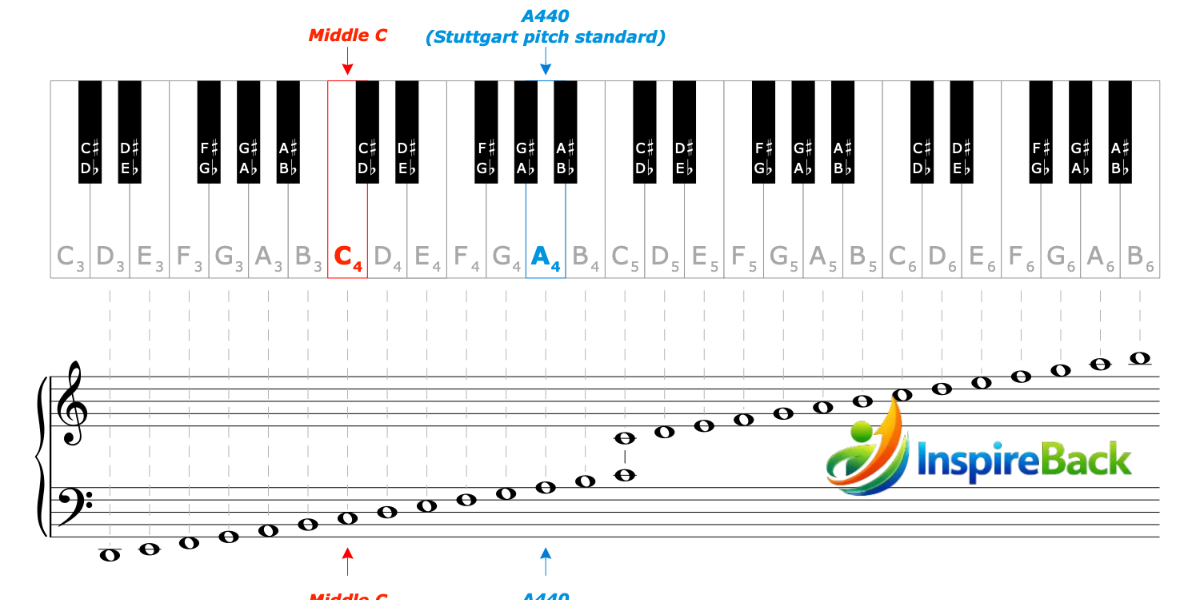
A scientific pitch notation chart visually represents how notes are organized across octaves. On the piano, each key corresponds to a specific label, making it easier to connect written notation with physical placement. This alignment helps beginners internalize pitch relationships and identify patterns across the keyboard.
In addition to note labels, frequency tables provide precise measurements in hertz. The standard reference pitch A4 equals 440 Hz, and each ascending octave doubles in frequency. This mathematical relationship highlights the scientific basis of musical sound and reinforces why scientific pitch notation is both practical and accurate.
Understanding Frequency and Tuning
Frequency refers to the number of sound wave vibrations per second, measured in hertz. When a pitch moves up one octave, its frequency doubles, creating a predictable and measurable pattern. This consistency forms the foundation of modern tuning systems and instrument calibration.
Scientific pitch notation works hand in hand with frequency standards, ensuring that musicians across the world tune to the same reference points. This alignment is crucial for ensemble performance, recording sessions, and digital music production where precise pitch accuracy is required.
How to Read Scientific Pitch Notation Step by Step
Reading scientific pitch notation begins with identifying the note letter. This tells you the pitch class and its position within the musical alphabet. The next step is recognizing any accidentals, which adjust the pitch slightly higher or lower.
After identifying the letter and accidental, observe the octave number. This number determines how high or low the pitch sounds. By combining these elements, you can accurately locate the note on your instrument or within a digital interface.
Practical Examples for Beginners
Consider the note E2. The letter E identifies the pitch class, while the number 2 indicates a relatively low register. On a standard guitar, E2 corresponds to the lowest open string in standard tuning.
Now compare E2 with E4. Although the letter remains the same, the octave number changes the pitch dramatically. Practicing these comparisons strengthens your understanding of scientific pitch notation and builds confidence in reading and performing music accurately.
Scientific Pitch Notation for Instruments and Voices
Different instruments rely on scientific pitch notation to define their playable ranges. For pianists, middle C serves as a central landmark that divides the keyboard into lower and higher registers. This visual reference makes octave identification intuitive and accessible.
Vocalists also benefit from octave labeling when determining comfortable singing ranges. Sopranos, altos, tenors, and basses can map their highest and lowest notes using precise pitch labels. This clarity supports healthy technique and informed repertoire choices.
Application in Digital Music and Education
In digital audio workstations, notes are displayed using scientific pitch notation, allowing producers to edit melodies and harmonies with accuracy. MIDI data depends on octave numbering to trigger the correct sounds, ensuring consistency across devices and sessions.
Music educators also rely heavily on this system when teaching theory and ear training. By introducing students to scientific pitch notation early, instructors provide a strong foundation for advanced study in composition, performance, and sound design.
Conclusion
Scientific pitch notation is a powerful and essential tool in modern music. By combining note names with octave numbers, it provides a clear, standardized system for identifying pitches across instruments and platforms. This consistency supports communication, creativity, and technical accuracy.
Whether you are a beginner exploring music theory or a professional working in a studio, mastering scientific pitch notation enhances your understanding of pitch relationships and musical structure. With practice and reference to charts and examples, anyone can confidently navigate the world of musical sound.
Frequently asked questions
What is scientific pitch notation?
Scientific pitch notation is a system that names musical notes using a letter and an octave number, such as C4.
What does C4 mean in scientific pitch notation?
C4 represents middle C on the piano in standard tuning.
What is A4 in scientific pitch notation?
A4 is the concert pitch set to 440 Hz in standard tuning.
How many octaves are used in scientific pitch notation?
Scientific pitch notation typically ranges from C0 to C8 on a standard piano.
Why is scientific pitch notation important?
It provides a clear and universal way to identify exact musical pitches.
How do you read scientific pitch notation?
Read the letter for the note name and the number for the octave to determine the exact pitch.
Is scientific pitch notation used in digital music software?
Yes, most DAWs and MIDI systems use scientific pitch notation to label notes accurately.
Also Read: dynamic mode decomposition